Interview with poet Mark Tredinnick
Re-enchanted by poetry

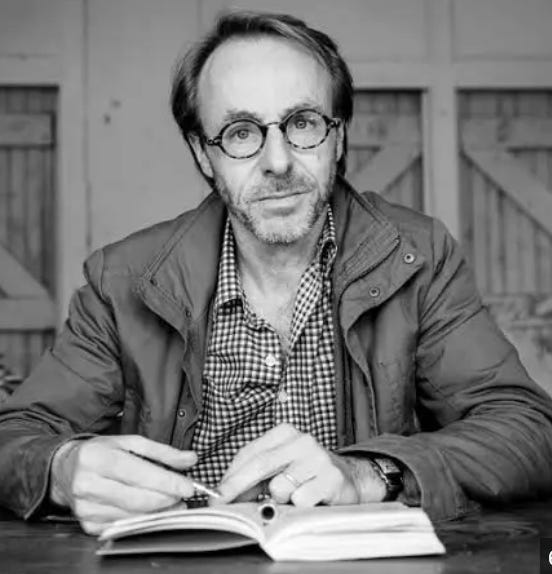
When did you first get interested in poetry?
I never wasn’t. But it wasn’t interest: it was love. And it was complicated and compulsive and heavy and eternal like love. At least it felt like that by the time I was in the final years of high school and reading G. M. Hopkins and John Keats and Emily Dickinson and finding what felt like the life I had to lead in them, the secret code to living well and making beauty. I think I “got” poetry like I “got” sandstone ecosystems and Dvorak’s cello concerto and cricket and soccer. And I realised most people did not similarly understand and love and need it (poetry) as I did.
But my calling to poetry … it began in the music my mother played on piano and organ and stereo—Bach and Grieg and Debussy and Vaughn Williams—and it began in some hymns (mostly by Charles Wesley) I got used to singing and hearing in church, and it began in an awareness the my grandfather made and delivered sermons each week and it began in reading Psalms and Ecclesiastes and the Gospel of John and it began in the poetry of some works of fiction I read (Watership Down, The Hobbit, TLOtR, Doctor Zhivago, White Fang, The Nargun and the Stars, Wind in the Willows ... And it began in a very deep feeling for and yearning for and delight in rocks and trees and creeks, in particular those around where I grew up in Warramudegal country (Epping); and for pastoral landscapes and ridge-lines and for horses. I felt the same way about the light and forms of nature as I did about phrases and lines of poetry, sometimes whole poems...
Poetry, of all the written forms, maybe of all the artistic forms, is the best matched in intensity and shapeliness and self-containment and form to the way a human life manifests—a chain of discontinuous profound moments. A poem is more like a place than a story, and our lives are made of places, some of which we enter again and again; others we encounter only once and are changed by.
What would you say to people who tell you, “I’m not really into poetry”?
I get it. Poetry has become harder to fathom than it should be and than it used to be. That has happened because of wrongheaded (I think), if well-intentioned developments in the theory and practice of poetry over the past one hundred years, which have led to the outcome in the past fifty years that most readers don’t know any more what it is about a contemporary poem that is poetic and how they are supposed to engage with a poem and what it is supposed to be doing for them.
So I’d say, seek out some poems that are less lost on you, and I can give you a list. Poems that are both beautiful and useful, delightful and comprehensible and instructive. And there have always been plenty of such poems and there are many being written and published even now. But poetry has, by its own failures and self-concern, largely lost its readership. The poets have run themselves out of town. Again, not all of them/ us. But enough that trust has been lost. My work as a poet and as a teacher and as an advocate for poetry is to win that trust back.
My list would include poems by Mary Oliver, Carol Ann Duffy, Seamus Heaney, Robert Gray, Rumi, Emily Dickinson, Billy Collins, just as a beginning.
What do people most commonly misunderstand about poetry?
The mistake is to sit a poem like a test. Bad way to approach the task. Don’t think you are asked to fathom or decode it. Admittedly, poems are, among other things, oracular, riddling, compressed. But so are places, so are people. Don’t sit a poem like a test. Enter a poem like a place, like a garden, like someone’s mind. Spend some time. Observe what is there and how it makes you feel. A poem that is any good is not reducible to what it appears to protest or propose. A poem is, again like a place or a moment, a manifestation of being. It is an event in words. It is an architecture of utterance. Enter into it and pay attention to it and how it changes you. There’s the poem.
Also, two more things: 1. Look at it before you read it. See it first as a form and wonder about that. A poem is a room or a series of rooms. Don’t jump to interpretation: just look and then enter. And 2. Sound a poem out. A poem is, as James Langenbach once said, “the sound of language organised in lines”. So see the lines; count them; say them. Sound the lines. Sound yourself. How are you now?
How do you think poetry can re-enchant a world that is often disenchanted?
Chanting is, of course, poetry’s work. A poem is an act of speech, and sculpture of voice. But in a poem, the deal has always been that the thing sings almost as much as it speaks. A poem is kind of speech-song. It chants; it does not merely think or say. And if you stop and think about it, there is something that music makes happen to and in and of us—especially the kind of music the human voice makes—that speaking prosaically, writing logically or narratively, does not fashion. Poetry works longer and deeper and more sensually, emotionally and spiritually than prose because it engages in musical utterance. It pays attention to the shapes of its sounds, its rhythms and cadences and alliteration—its speech music of all sorts—in ways that even the finest prose does not because it is not concerned to. And so we are touched and altered by the sound structures of music at the same time as we are engaged by, shuddered by, struck by its images and storylines and messages. Sometimes we are so affected, you would call it magic or healing.
The magic poetry works is closest of course to a SPELL: because poetry as art happens in words, phrases, letters ordered not just for sense but for their aural adequacy to shape an experience for a reader. Poems cast spells, then. And some of them, and so it often is for me and often was as a child, feel like spells that make my own life older, wiser, more lovely, more complicated, and the whole world more layered and ancient and endless than either it or I had felt a moment before. Perhaps it is that the world of all being operates at many frequencies at once and some of them are lyric frequencies, and those feel oldest and most like wonder and awe and truth, and poetry in its care for rhythm and everything else about writing that most writers are not so interested in.
I like the way Emily Dickinson said it. Life is a spell so exquisite that everything conspires to break it. And ain’t that just so? Poetry, she did not say, but meant, recasts the spell that life is. The divine gift of our lives in the divine gift of this world.
What would you advise someone who wants to start reading poetry?
Find poems that don’t confuse you too much but tax you a little. Start with short ones. Let poems that stop you and delight you lead you to other poems in their kinship group. Where to look though? I can recommend books, but I’d start with these four sites online. Poetry is Not a Luxury. The website of the Academy of American Poets @poets.org. The Poetry Foundation website. The Slowdown, fantastic site, founded by Major Jackson, that shares a quite accessible, old or new poem a day and talks about it a bit. The Red Room Poetry Company.
What are some of your favourite poems and why?
Seamus Heaney’s Postscript. Such clarity and grace and spiritual wisdom. Some of Basho’s haiku. Billy Collins’s “Litany”: its humour and seriousness, the loveliness of its references. Linda Gregg’s “Adult”: its “grownupness”. Jack Gilbert’s “Horses at Midnight Without a Moon”: the horses, the gladness, the moon, the easy wisdom. Mary Oliver’s “The Grasshopper”, Anne Sexton’s “The Black Art,” for its wit and sexiness about creativity and love. Judith Nangala Crispin’s “ ON Finding Charlotte,” for its simple profundity about a moment of discovering oneself and life. Parts of Dante’s Divine Comedy. Sappho’s Ode to her love. Louis Macneice, “Snow” for its line “the drunkenness of things being various.” Ellen Bass’s “Indigo”. Larkin’s “The Trees” and “The Mower” for its line “let us be kind while there is still time.” And Emily Dickinson’s “Hope is the Thing with Feathers”
I like poems that are at once plainspoken and modest and simple and not as simple as they seem and ambitious for truth and astonishing: in their honesty, in their wit, in their seeing, in their thinking, in unpretentious.
It may seem odd, but I think some of my favourite poems are some of my own. Not because I wrote them but because they found me and I didn’t muck them up, and because the reason one writes is because poetry inspires one but the poems one most wants written probably arise in one’s own life and voice. House of Thieves, Soft Bombs, Fire Diary. Some others.
What will you bring to this poetry reading gathering on Zoom on 18th July?
All these thoughts, some metaphors for how to understand a poem, a few poems from above and a couple of new ones by me.
Mark will be facilitating a poetry reading zoom session on 18th July 10 am.
To book your place, see the link below.
https://events.humanitix.com/poetry-reading-with-mark-tredinnick
Love this: The magic poetry works is closest of course to a SPELL: because poetry as art happens in words, phrases, letters ordered not just for sense but for their aural adequacy to shape an experience for a reader. Poems cast spells, then.